CellDrop Fli
The CellDrop FLi is a dual fluorescence and brightfield automated cell counter designed for laboratories working with a broad range of complex cell types, including primary cells, isolated nuclei, hepatocytes, plant cells, insect cells, and GFP-expressing samples. By combining fluorescence imaging with brightfield analysis in a single instrument, the CellDrop FLi increases counting accuracy for samples where brightfield alone is insufficient to differentiate cell populations from debris or non-nucleated cells.
.png)
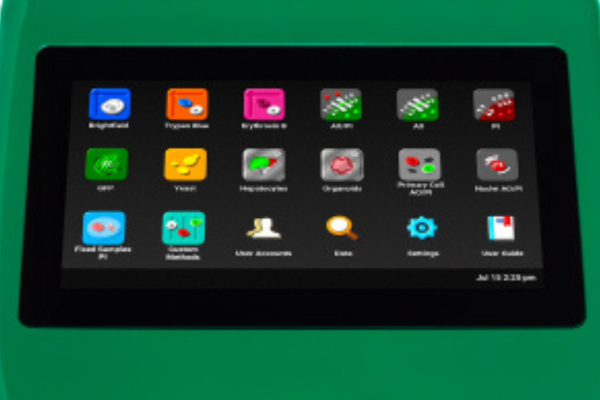
Image 1
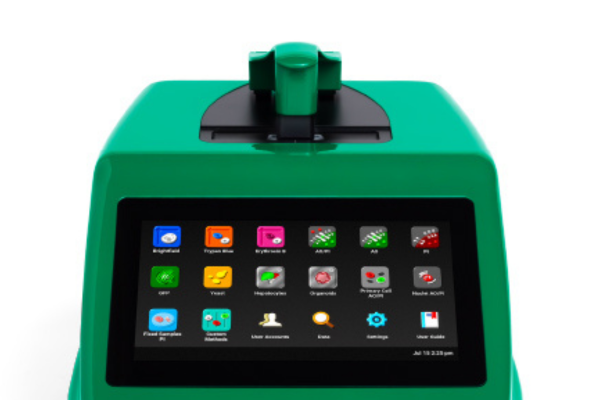
Image 2
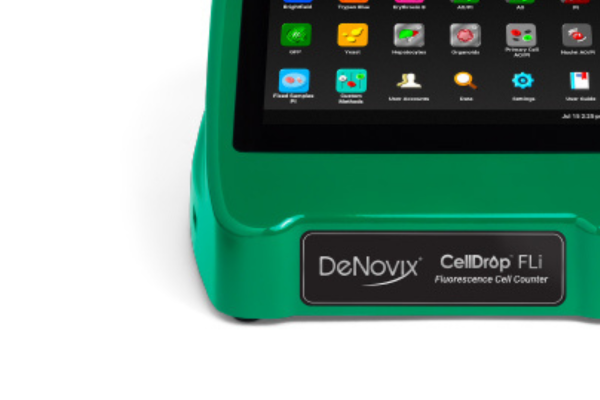
image 3
CellDrop Fli
The CellDrop FLi is a dual fluorescence and brightfield automated cell counter designed for laboratories working with a broad range of complex cell types, including primary cells, isolated nuclei, hepatocytes, plant cells, insect cells, and GFP-expressing samples. By combining fluorescence imaging with brightfield analysis in a single instrument, the CellDrop FLi increases counting accuracy for samples where brightfield alone is insufficient to differentiate cell populations from debris or non-nucleated cells.
Working Principle
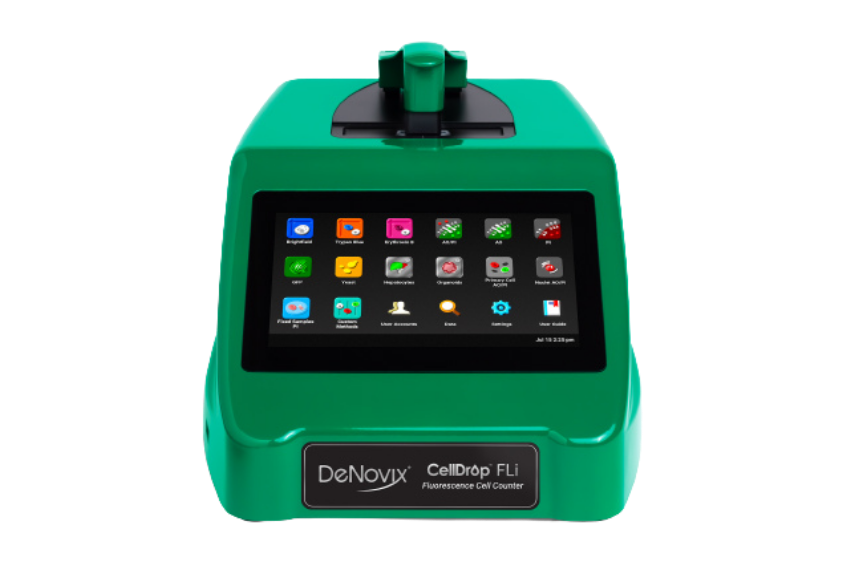
Using DirectPipette™ technology, the sample is loaded directly between two optical-grade sapphire surfaces without the need for slides. Brightfield illumination at 530 nm and fluorescence excitation at 470 nm are applied simultaneously, with emission captured through dual filters at 525 nm (±25 nm) and 645 nm (±37 nm). AO/PI staining enables clear differentiation of viable cells, dead cells, and debris. The standard 4X objective covers cells from 4 to 400 µm, and results are delivered in 8.5 seconds in dual-fluorescence mode or 3 seconds in brightfield alone. EasyApps™ software handles autofocus, declustering, and irregular cell detection automatically.
Key Features
The CellDrop FLi operates across a dynamic range of 7×10⊃2; to 2.5×10⁷ cells/mL, supporting tissue culture, primary cell, fixed sample, and nuclei counting workflows. Its wipe-clean sapphire chamber surface removes the risk of carry-over between samples, and flexible purchase plans accommodate varying throughput needs across research teams.
Reliable Performance